
I'm an engineer, which mostly means I like fixing things. I got it from my dad.
When I was small, my favourite thing in the world was to be his assistant. He ran an R&D lab — spent his days repairing and building and wiring things together to reshape his corner of the world — and as a four-year-old, the most useful thing I could do was hand him what he needed.
He told me once that there are two ways to help someone. You can lay out every tool they might need within reach, then step back and let your mind wander. Or you can do the harder thing: run the whole job in your head alongside them, and put the one tool they're about to reach for into their hand a second before they ask for it. The right thing at the right time, and nothing else.
I've been trying to build the second kind ever since.
These days I do it at Southbridge — the chip, not the bridge; San Francisco and Singapore — where I'm CEO and we build data agents with the craziest people I know. The unglamorous version: software that wades into the first mile of someone's data — health records, financial filings, decades of energy readings, the tangled pile nobody can afford to throw away — and makes it usable. It is, more or less, my dad's job: work out what someone needs from a mountain of information, and have it ready before they ask.
I came to all of this from a long way off. I grew up in small towns, farms, and government housing in India, in a railway family, in a Kerala village that never held more than a couple of thousand people. Everyone knew everyone, and you were mostly known by your craft — carpenters on my mother's side, farmers on my father's. I started doing signal-transmission work on a government railway project at fourteen, came to Singapore at fifteen on a scholarship, and the day I landed I became, for the first time in my life, "Indian." It's been home since.
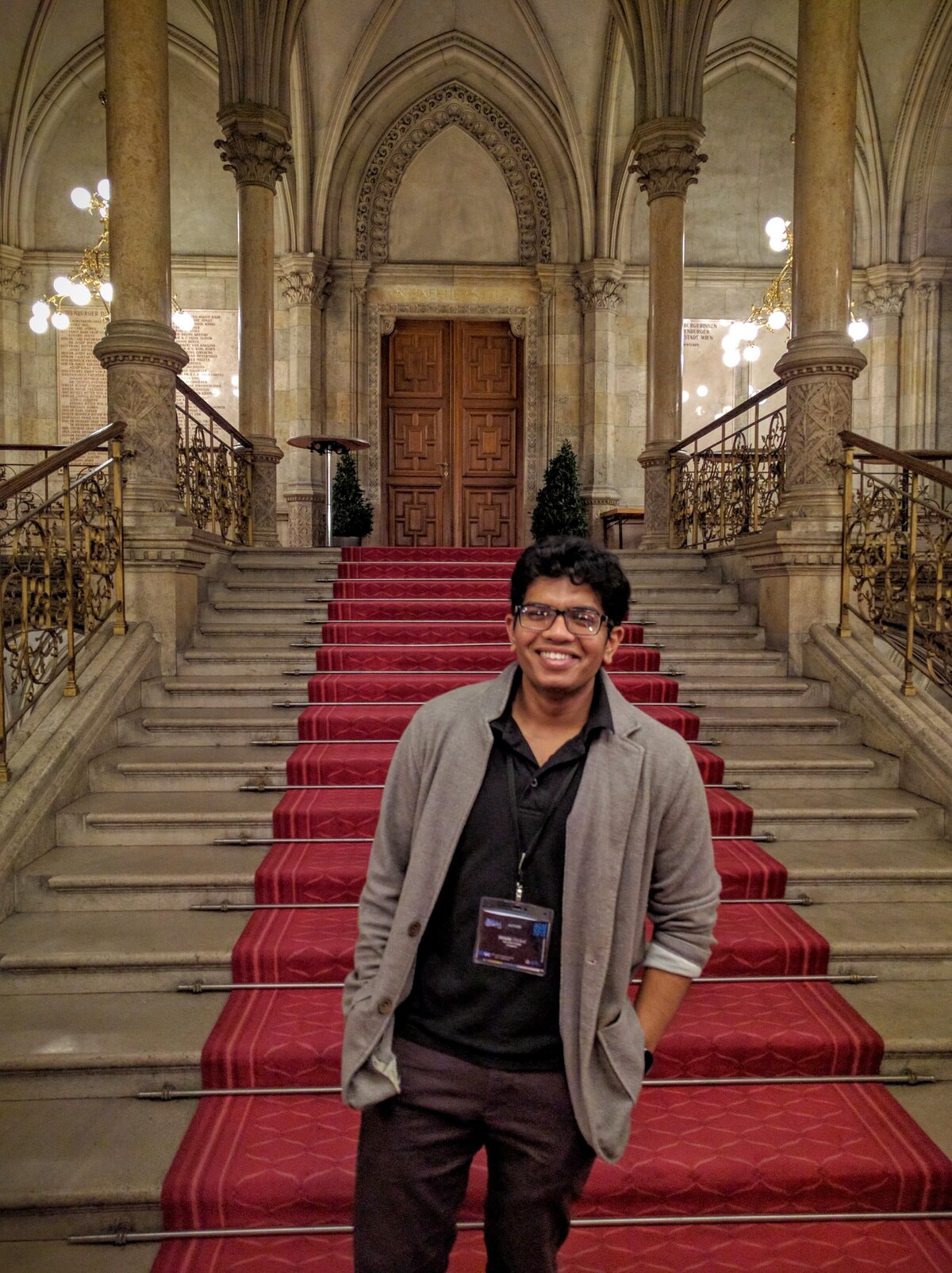
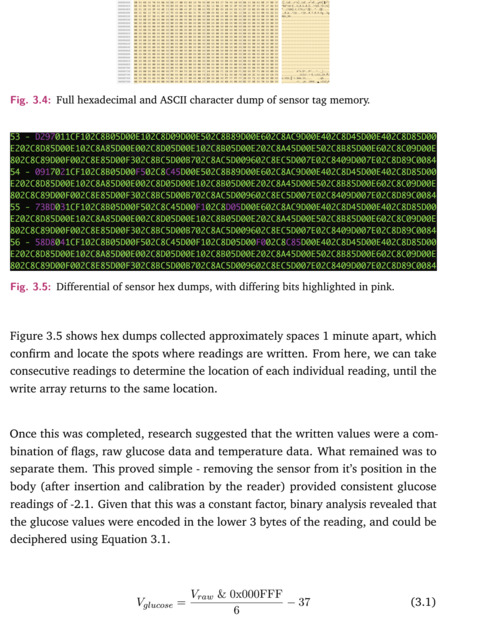
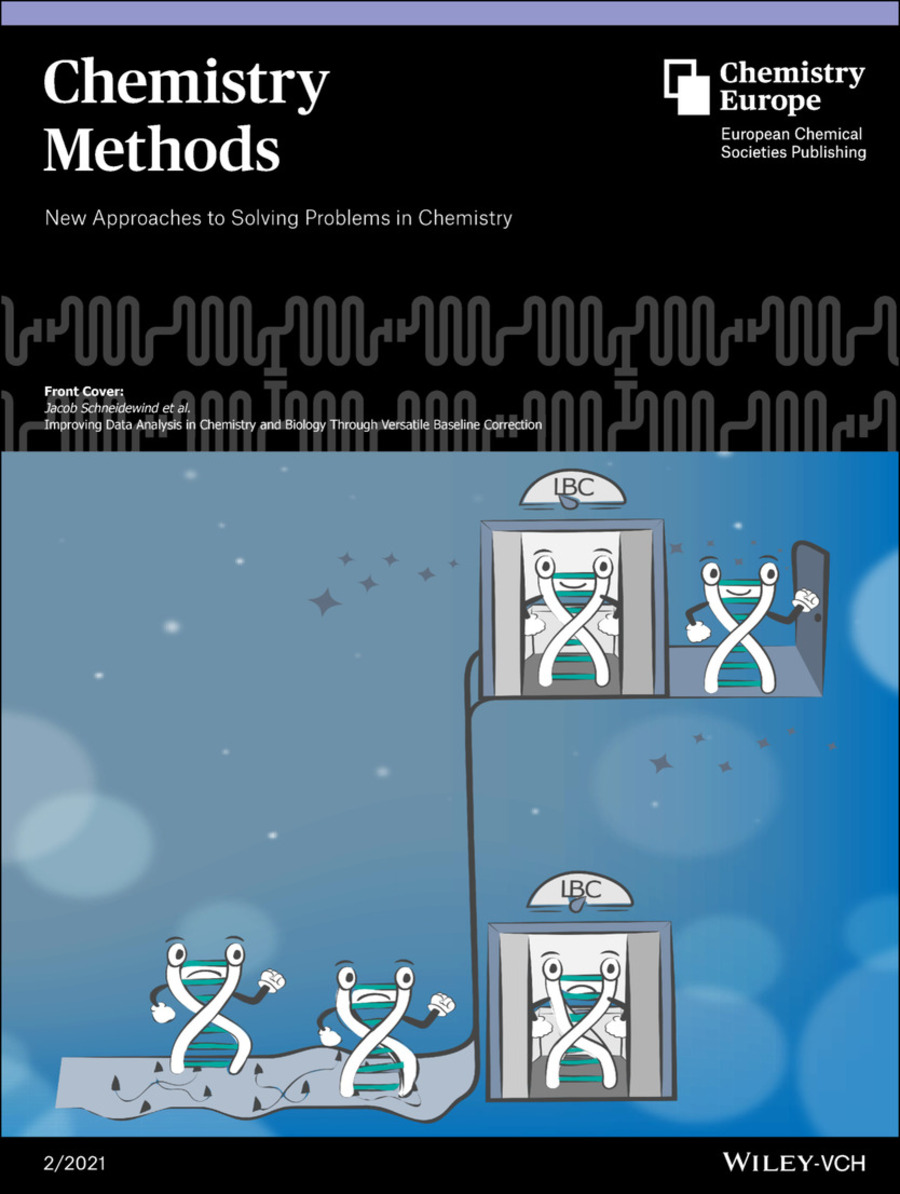
The through-line only really shows up in the rear-view mirror. My twenties were signal processing, fibre optics, microcontrollers, and research at Yale-NUS — which somehow turned into co-authoring Oyente (ACM CCS 2016), a symbolic-execution engine that flagged more than $62M of exploitable Ethereum smart contracts at the time, and whose code later joined the Ethereum Foundation. You can watch me present it, visibly nervous, to a very large room in Vienna at twenty-two. Around the edges: a paper on sensory substitution, a three-country patent on thermal fire detection, the cover of Chemistry-Methods for a baseline-correction trick that ended up inside DNA sequencing and X-ray crystallography, and a long detour into reverse-engineering a glucose monitor. Different uniforms, the same problem underneath — getting some piece of stubborn reality into a shape a machine can reason about.
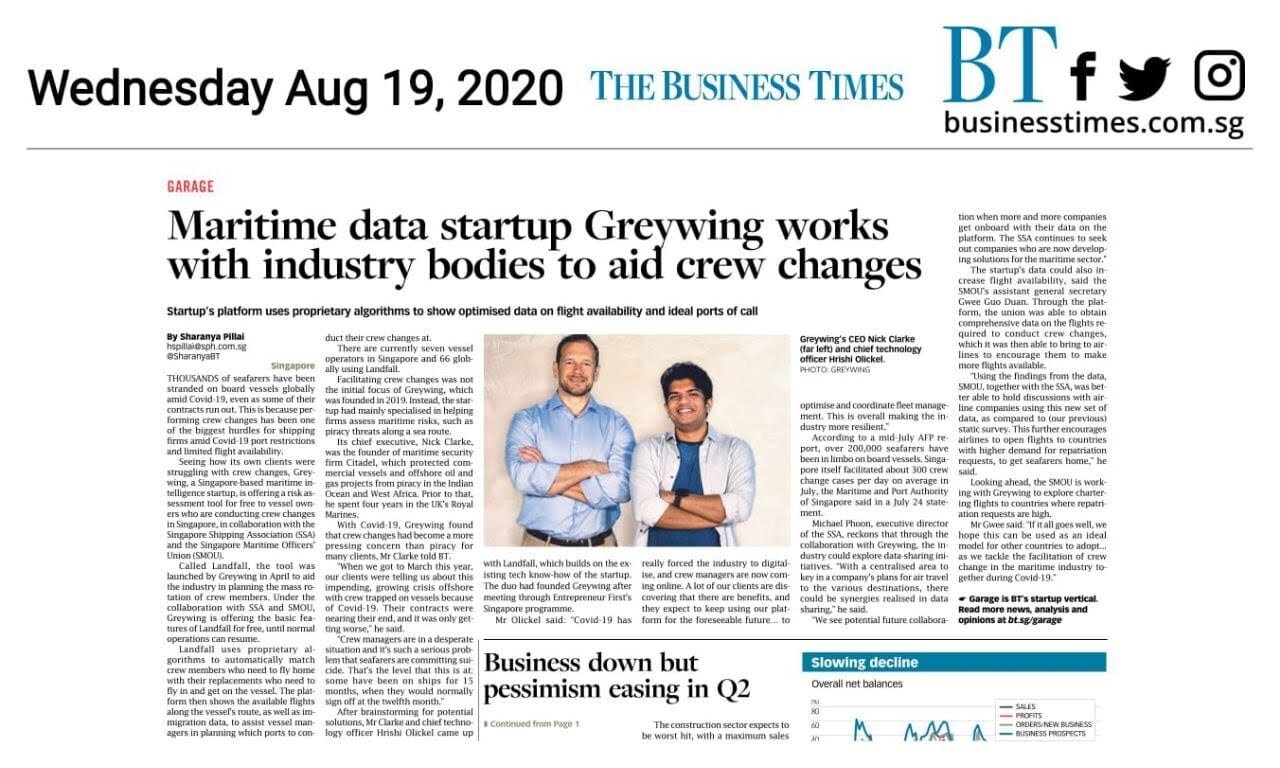
The next stretch was five years — a little over 1,900 unbroken days — as co-founder and CTO of Greywing (YC W21), building software for some of the largest shipowners in the world: routes, fuel, flights, and crew, across more dimensions and data silos than anyone should have to hold in their head. When Covid shut the borders we pivoted in a couple of weeks, and what we built ended up helping tens of thousands of stranded seafarers get home. A year later, the same routing code helped me find my own way home after I lost my dad. I stepped away in 2024 — burnt out, and fairly sure I was the wrong shape for the industry — though I'd take those years, and those people, again without a second thought.
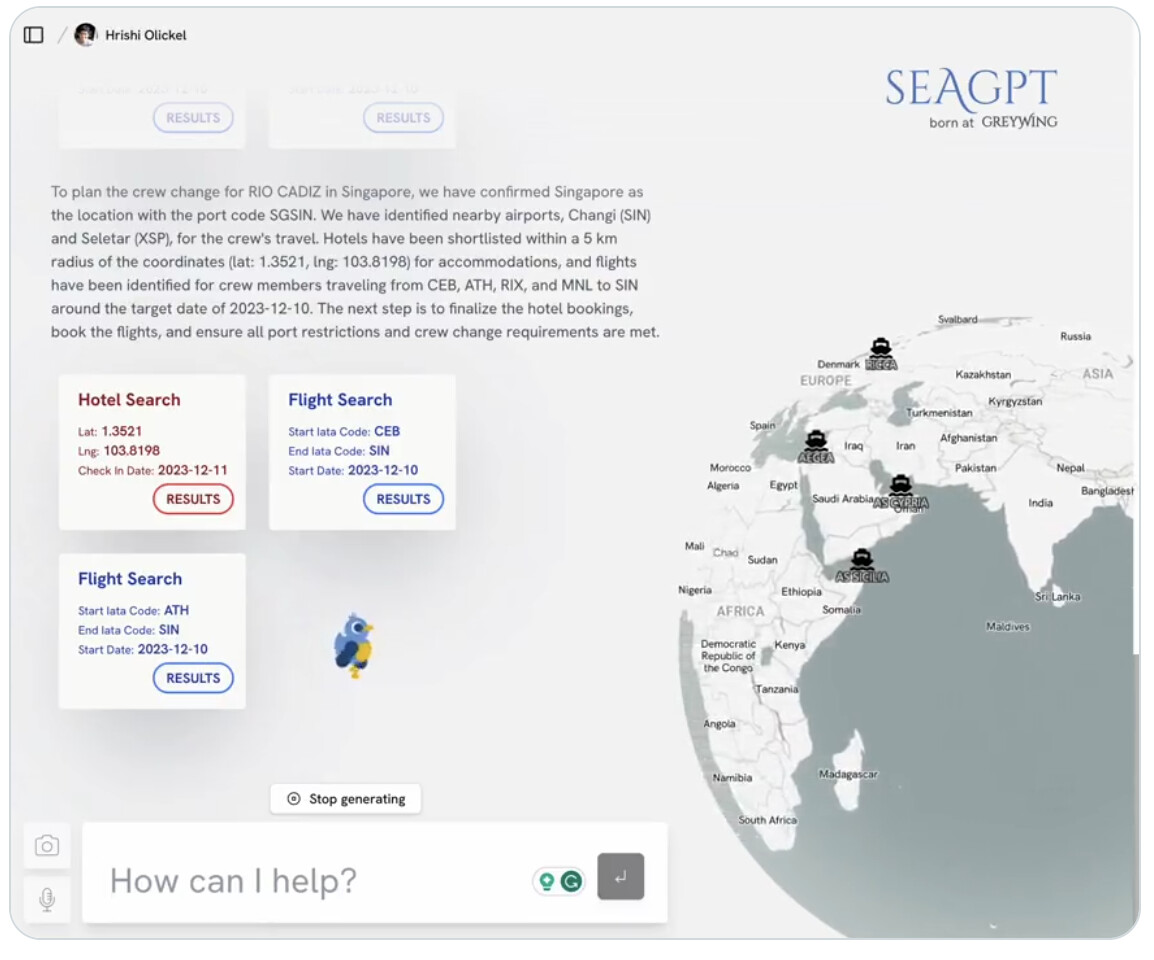
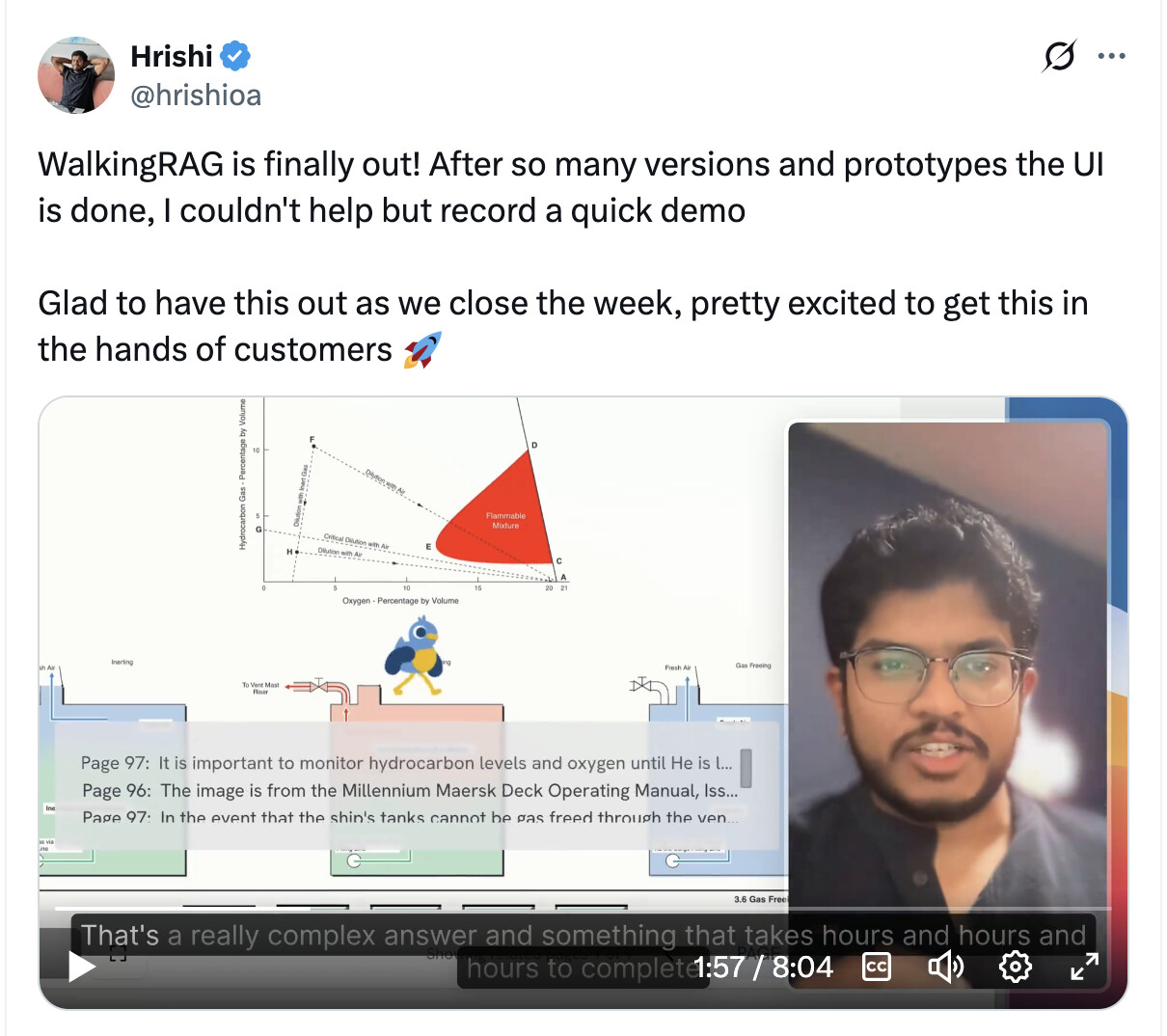
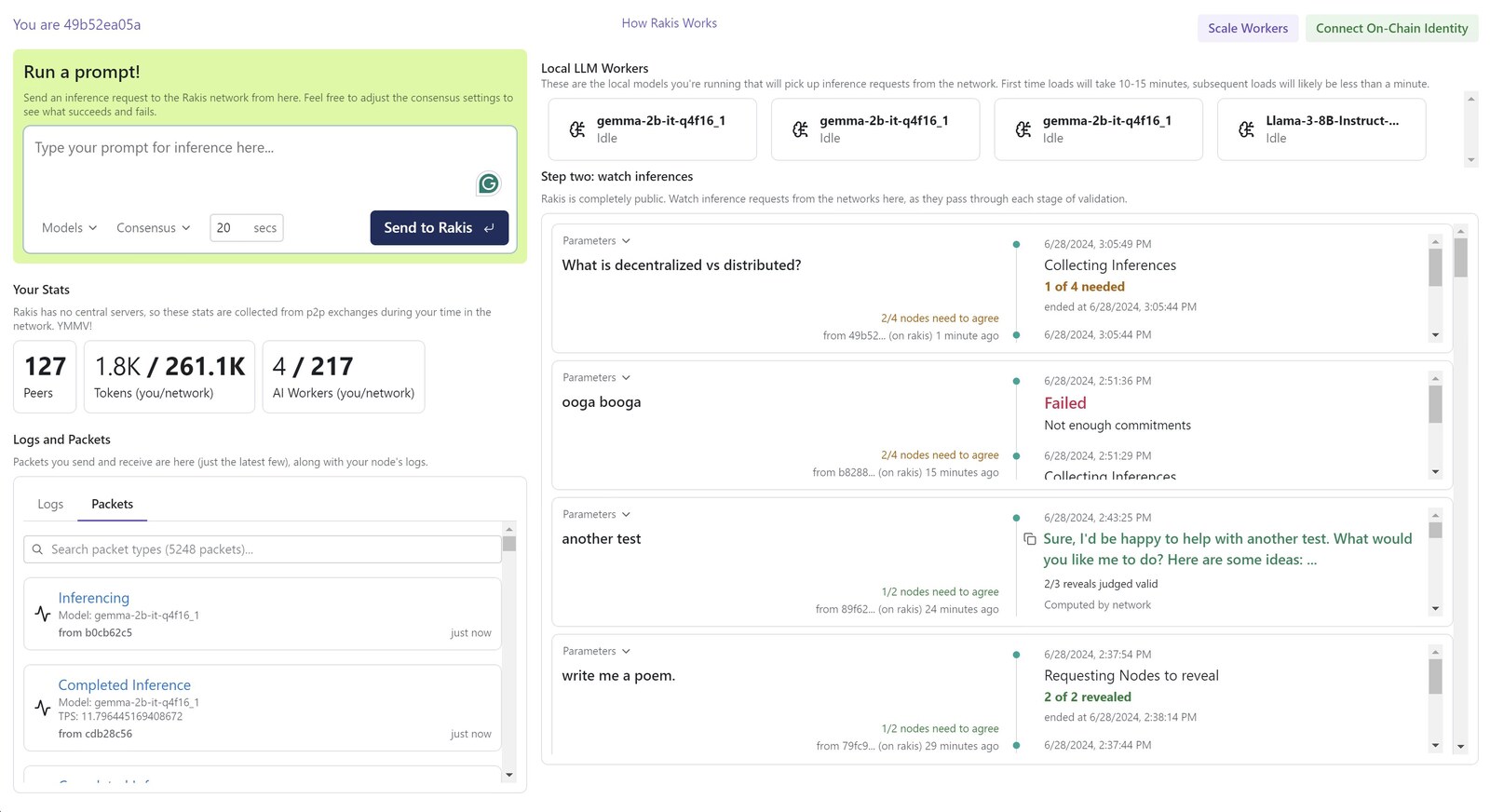
A few of the things we made there outlived the company as ideas. SeaGPT, our maritime agent, was doing streaming, parallel tool-calls on GPT-3.5 when — as far as I know — nobody else was. WalkingRAG was one of the first attempts I know of at getting a model to 'walk' through a document the way a person does, chasing one half-answer to the next; I wrote it up in a three-part series I still hand people. Then, on a flight to see family, I built Rakis in ten days — a decentralised LLM network that runs entirely in the browser — mostly to find out whether it could be done.
The problem then was the one it has always been for me: data. We're surrounded by information that could describe and improve our lives, almost all of it ours, and hostile engineering, silos, and yesterday's tools keep most of it out of reach. Southbridge is what I'm doing about it.
We've open-sourced Hankweave, the long-horizon runtime we lean on when a job runs for hours or days instead of seconds, and I set the thinking down first in Antibrittle Agents. Lately I've been saying it out loud, too — No Country for Old Code at AI Engineer Singapore, the first AI Engineer flagship in Asia, and Synthetic Hires at SuperAI — both, underneath, about what changes when you stop treating an agent as a tool and start treating it as someone you've hired.
My dad believed you can't help but be happy when there's still a lot to learn. Every year I find more.
I write to think. These days it's spread across southbridge.ai/blog, this blog, Twitter, and a lot that stays inside the company — but here are some whose graphs refuse to flatline:
§Selected writing
- Why Smart Contracts Fail (Medium, 2016) — the Oyente companion piece that went viral and helped land the code in the Ethereum Foundation.
- Schema on Write is better to live by (2021) — HN front page; the data-substrate essay that quietly became the Southbridge thesis.
- Losing our product to Button Syndrome (2022) — HN front page; the dad-as-engineer essay that traces the Greywing product philosophy.
- Object-Oriented Large Language Models (2023) — HN front page; the architecture essay behind SeaGPT's multi-agent design.
- Better RAG (3 parts) (Hugging Face, 2024) — the agentic-retrieval pattern.
- Introducing Rakis (2024) — the ten-day decentralized-LLM-network ship-it.
- Everything I know about prompting LLMs (2024) — the things I'll forget if I don't write them down.
- Everything about evals (2024) — same, but for the part where you check your work.
- Antibrittle Agents (2025) — the manifesto for long-horizon agents that became the Hankweave runtime.
I try to write year-in-reviews (even though the years are filling up more and making it harder): 2020, 2021, 2022, 2023, and 2024 (with a 4.5 follow-up). 2025 has been in-progress for a bit now — I apologise!
A few popular threads:
- Walking RAG demo (Dec 2023)
- Greywing's four-year retrospective in 60 seconds (Nov 2023)
- Decompiling Claude Code from a minified bundle in a Saturday (Jun 2025)
- Kimi K2 vs Grok 4 (Jul 2025)
§Open source and projects
A mix of viral things, weekend hacks, and home-cooked apps for people I love. Stars where they exist.
Used by other people:
- lumentis (1.7k★, 2024) — One-click AI-powered docs from transcripts. Hit #2 on GitHub trending in March 2024.
- offmute (565★, 2024) — Meeting transcription and diarization with just an LLM. Maybe a little overboard.
- wishful-search (412★, 2023) — Natural-language search over complex JSON arrays.
- mandark (254★, 2024) — A simple AI engineer; runs on
npx; works on himself. - diagen (252★, 2024) — Diagram generation pipeline.
- wasm-ai (173★, 2023) — Vercel + web-llm template to run wasm models in the browser; the precursor to Rakis.
- rakis (127★, 2024) — Browser-based decentralized LLM consensus network.
- hankweave-runtime (127★, 2026) — Long-horizon agent runtime; powers Southbridge.
Smaller things I'm fond of:
- socrate (28★, 2023) — A discussion room of GPT personalities with internal monologues, debating problems together.
- tough-llm-tests (28★, 2024) — Hard questions for evaluating new models.
- dadeumi (12★, 2025) — Iterative-reflection translation tool. Used to translate my 2024 Year-in-Review into Korean.
- ipgu (2025) — End-to-end pipeline that turns a video into accurate, timed, bilingual SRT subtitles with LLMs. Named 입구 ("entrance" in Korean).
- meeting-diary (11★, 2025) — Simple meeting transcription.
- async-interval-queue (2019) — A tiny zero-dependency job queue I wrote six years ago; still being installed ~75 times a day. The web doesn't die.
§Selected publications
- Making Smart Contracts Smarter — Luu, Chu, Olickel, Saxena, Hobor — ACM CCS 2016. (Oyente.)
- GooseBumps: Toward Sensory Substitution Using Servo Motors — Olickel, Bhatnagar, Ong, Perrault — ACM ISS 2017.
- Improving Data Analysis in Chemistry and Biology Through Versatile Baseline Correction — Schneidewind & Olickel — Chemistry-Methods 2021. (Cover.)
- Random Number Generation Using Chua's Circuits — Yale-NUS, 2015.
- Continuous Glucose Monitoring (analysis) — with Hilhorst.
- Full list: Google Scholar.
§Selected press
- Forbes 30 Under 30 Asia 2023 — Enterprise Technology
- TechCrunch: Crew Change launch (2021), seed round (2021), SeaGPT (2023)
- Lloyd's Register: From Piracy to Protecting People's Wellbeing (April 2021)
- TradeWinds: Greywing's Proteus (March 2024)
- Smart Maritime Network: IINO + Crew Matrix Planning (2023)
- Cretu interview, Medium (2023)
§Selected talks
- Oyente — ACM CCS 2016, Vienna
- Machine Impossible — National Geographic, 2016 (Software Lead, Singapore Team).
- LLMs: A Hacker's Guide (2024)
- A Solid Pattern to Build LLM Applications (2024)
- No Country for Old Code — AI Engineer Singapore, May 2026 (essay)
- Synthetic Hires — SuperAI Singapore, June 2026 (essay)
- Full channel: @olickel.
§Reach me
Twitter · LinkedIn · GitHub · Hugging Face · Google Scholar
Always happy to chat.



Not a newsletter